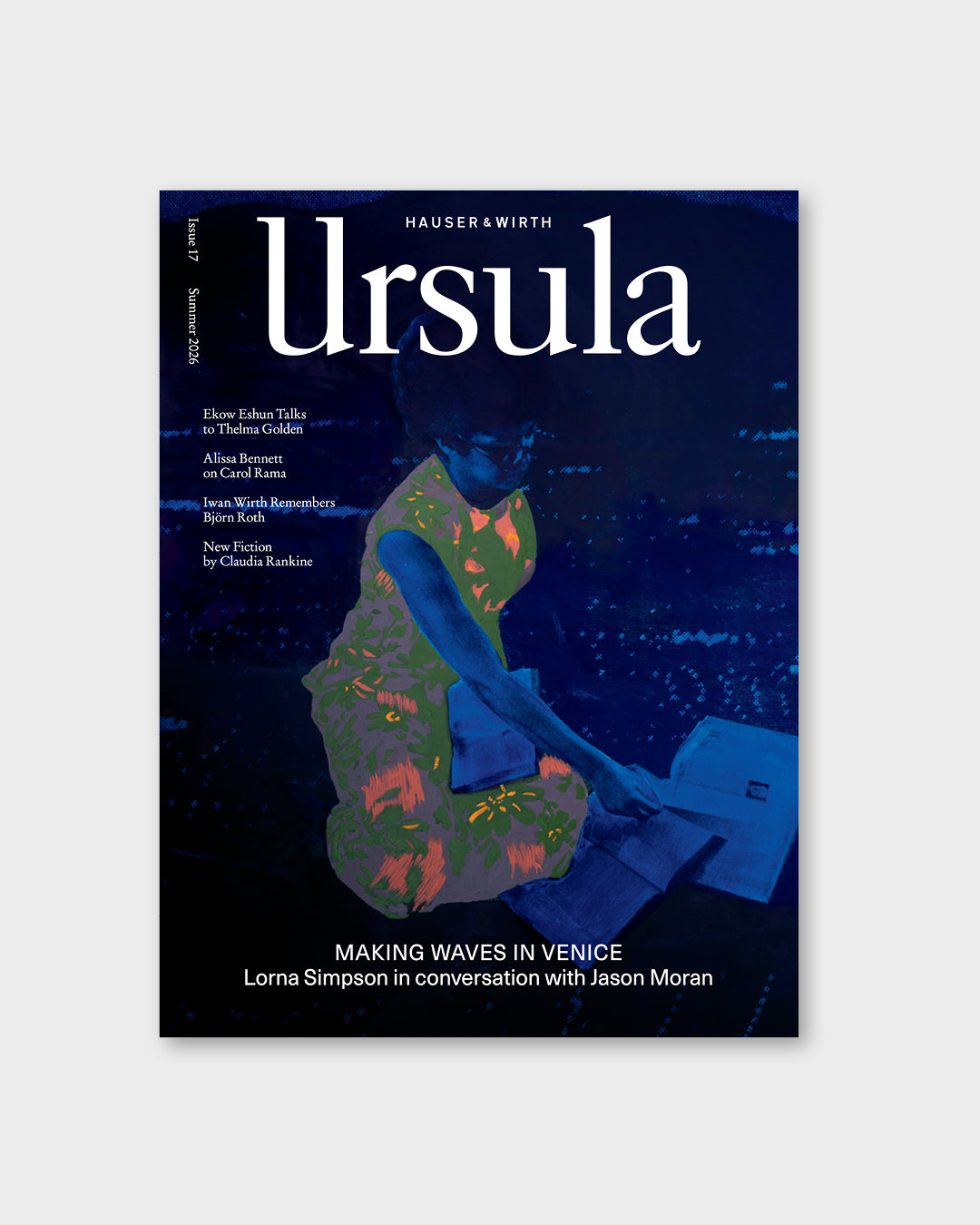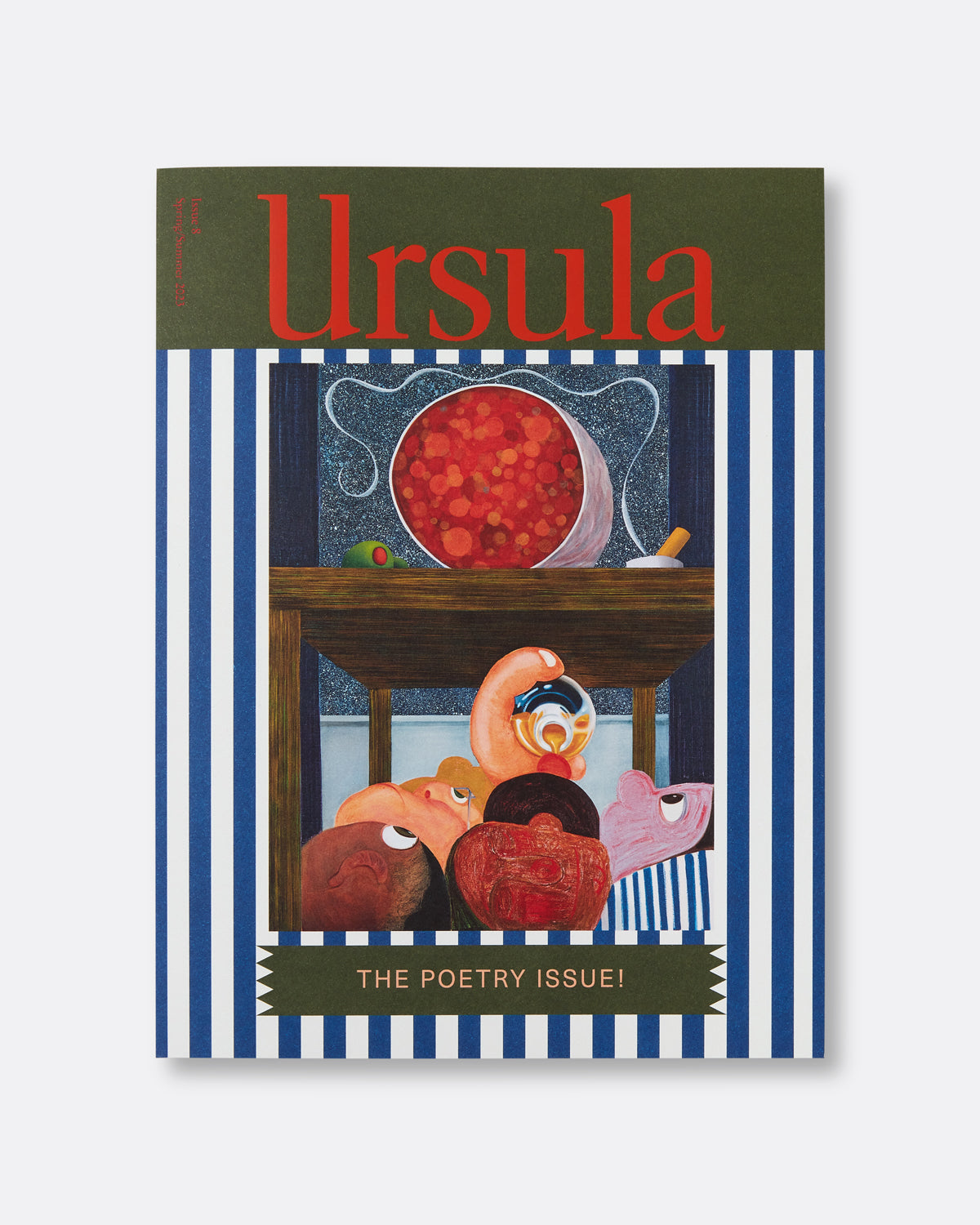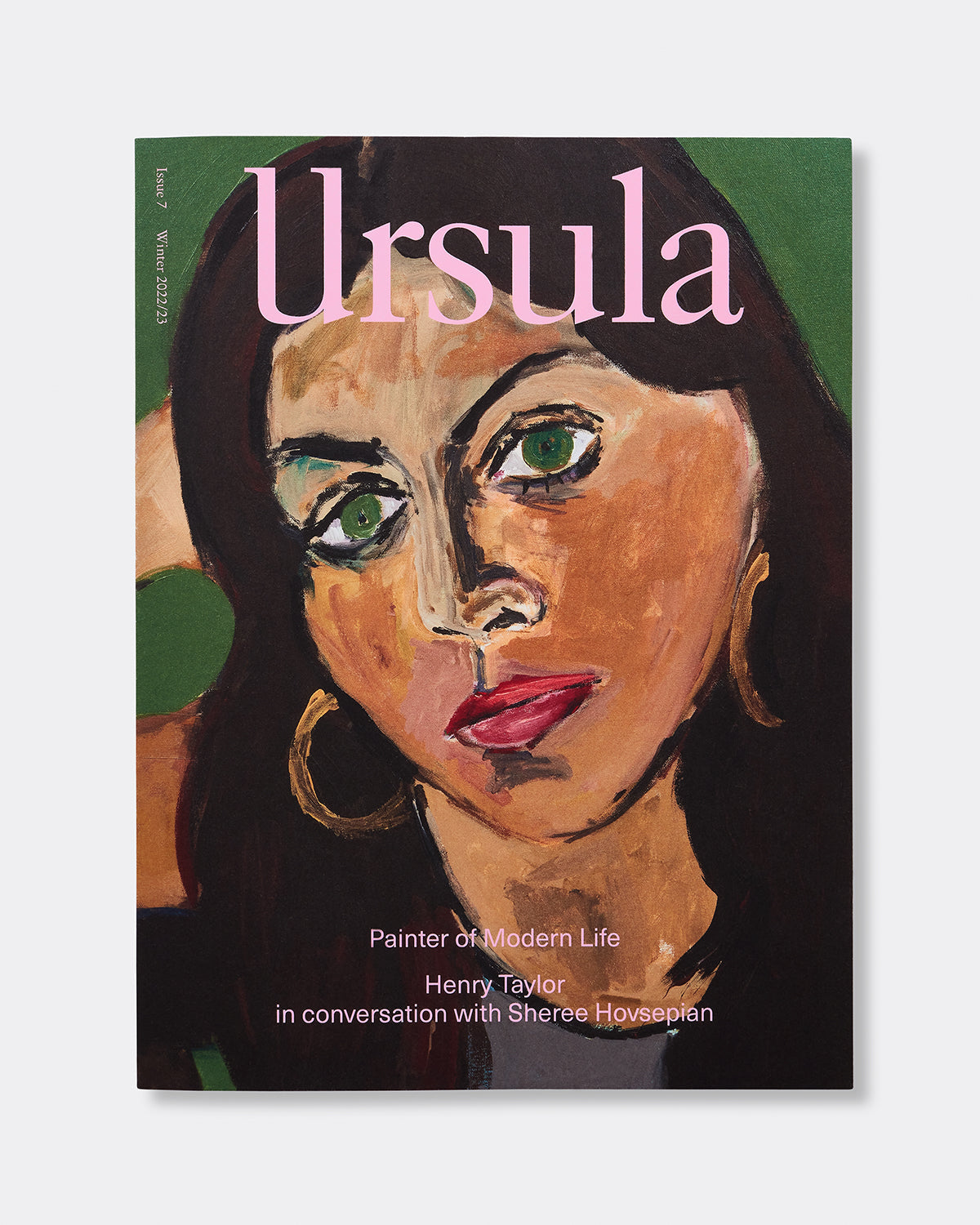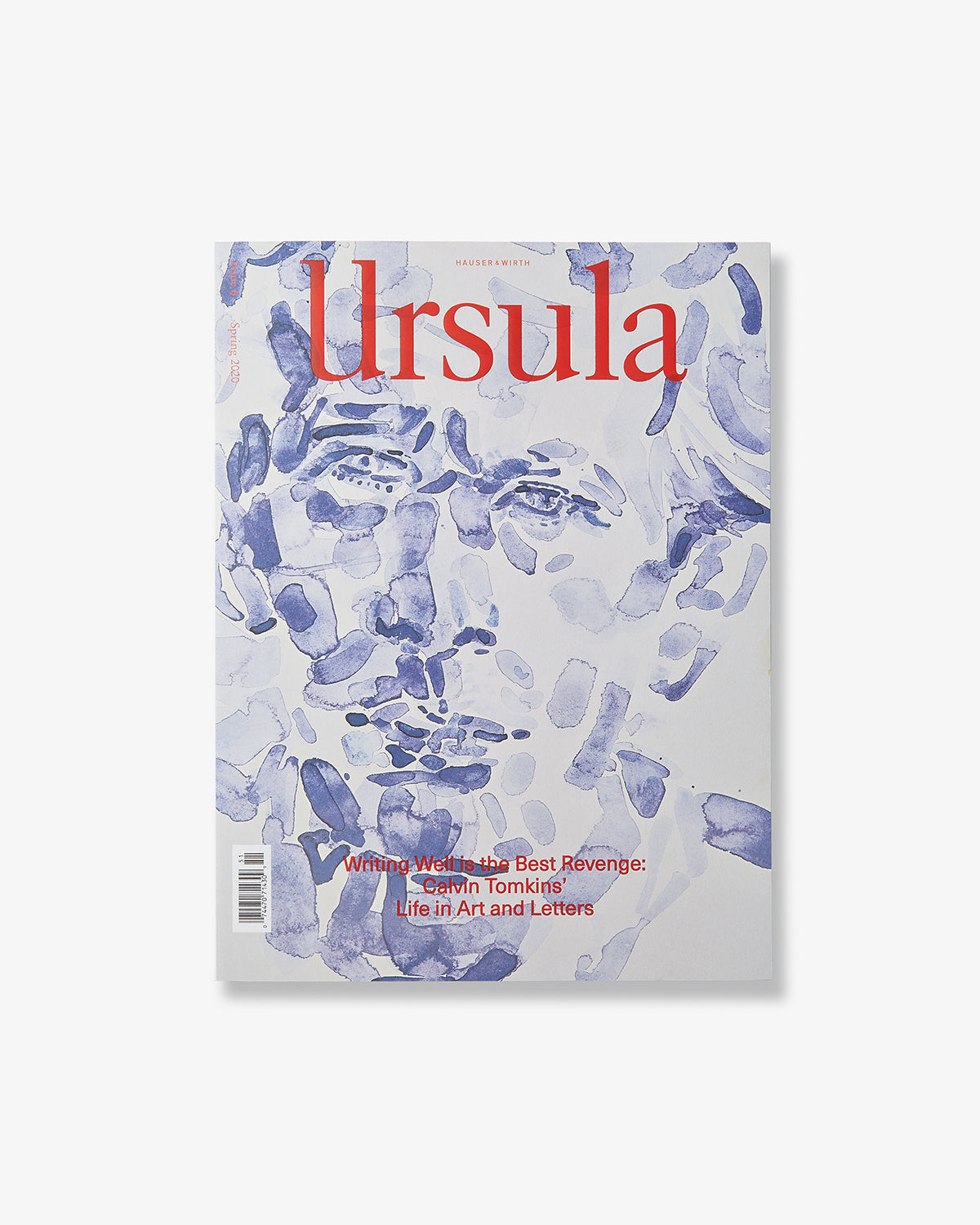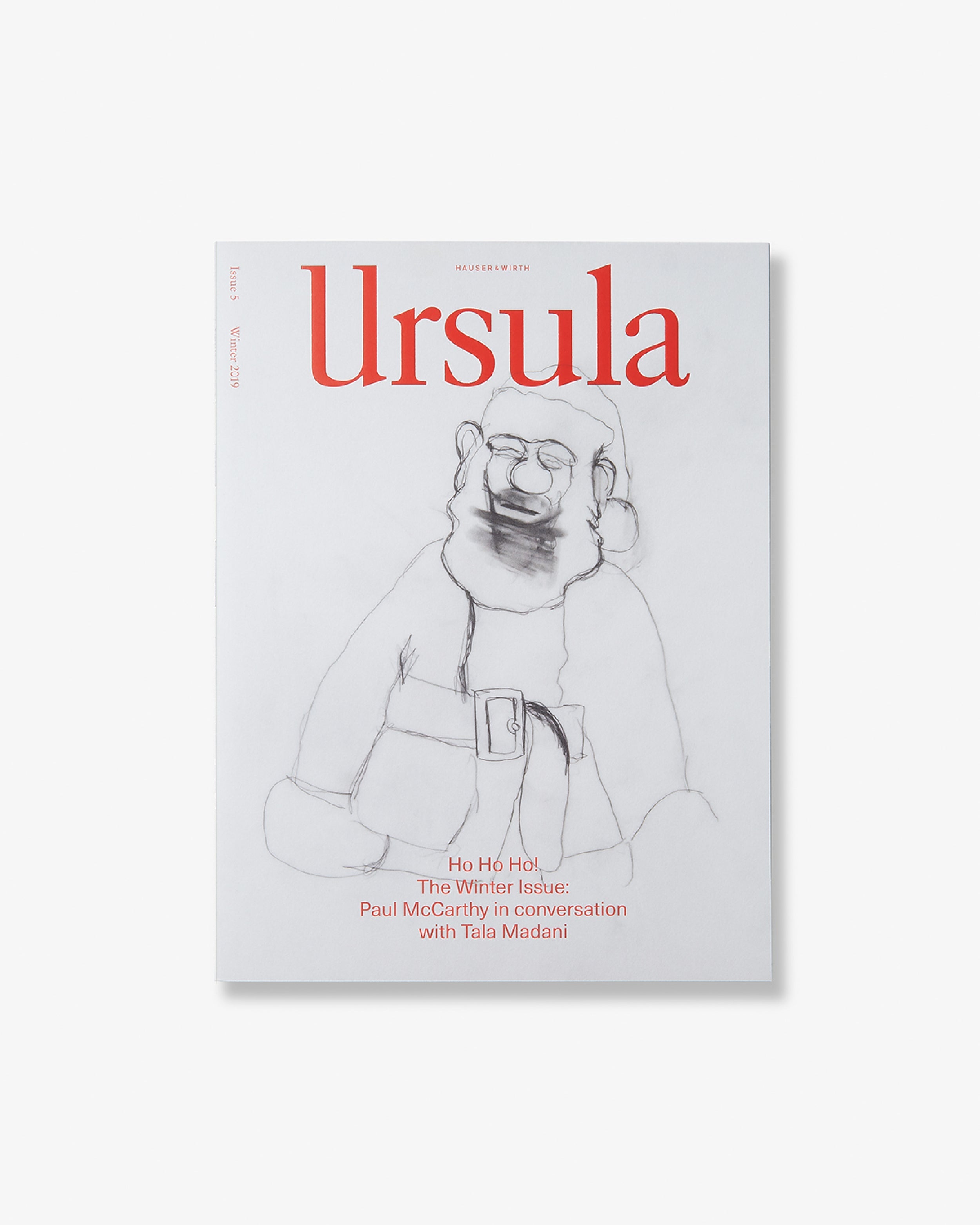



Ursula: Issue 18
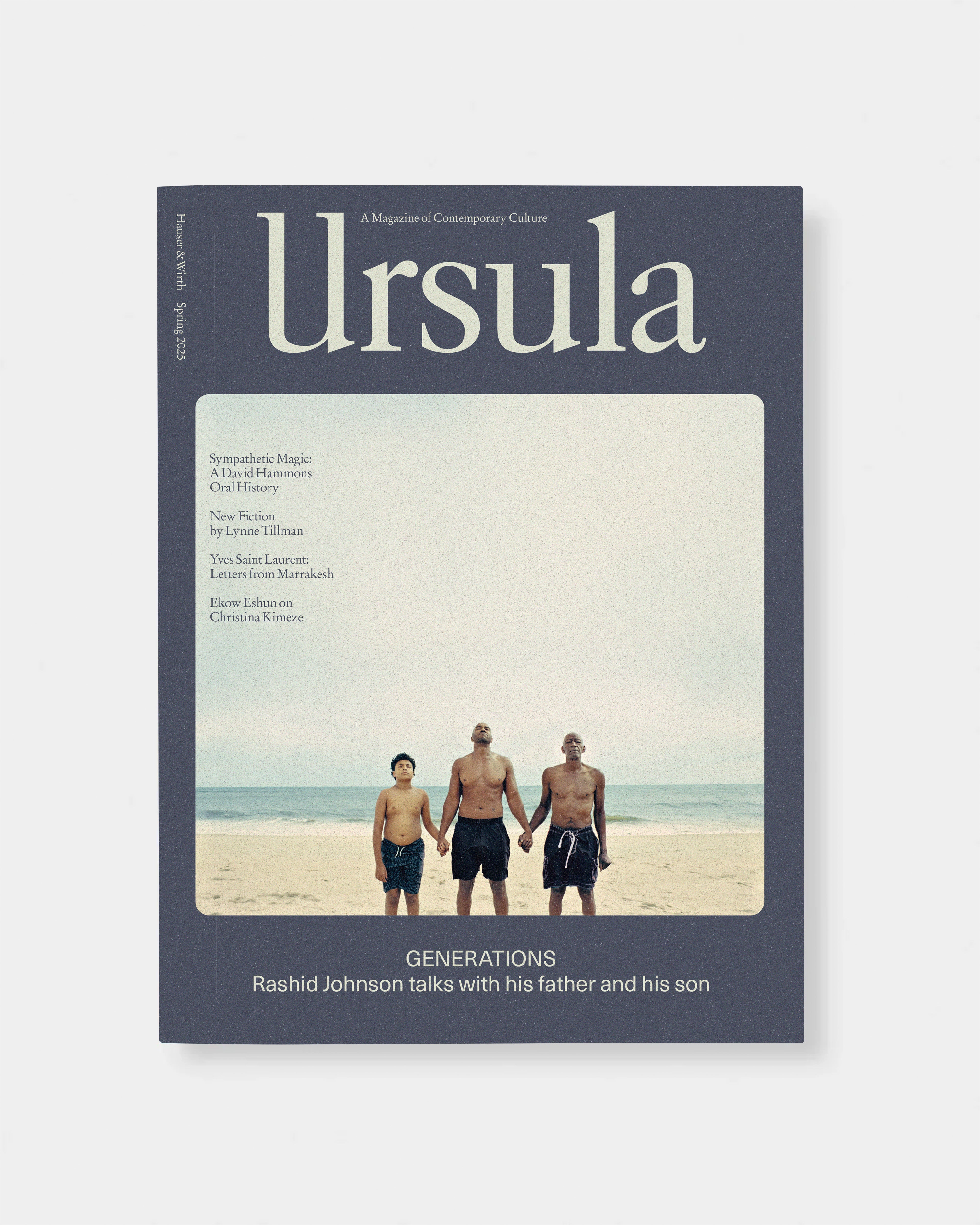
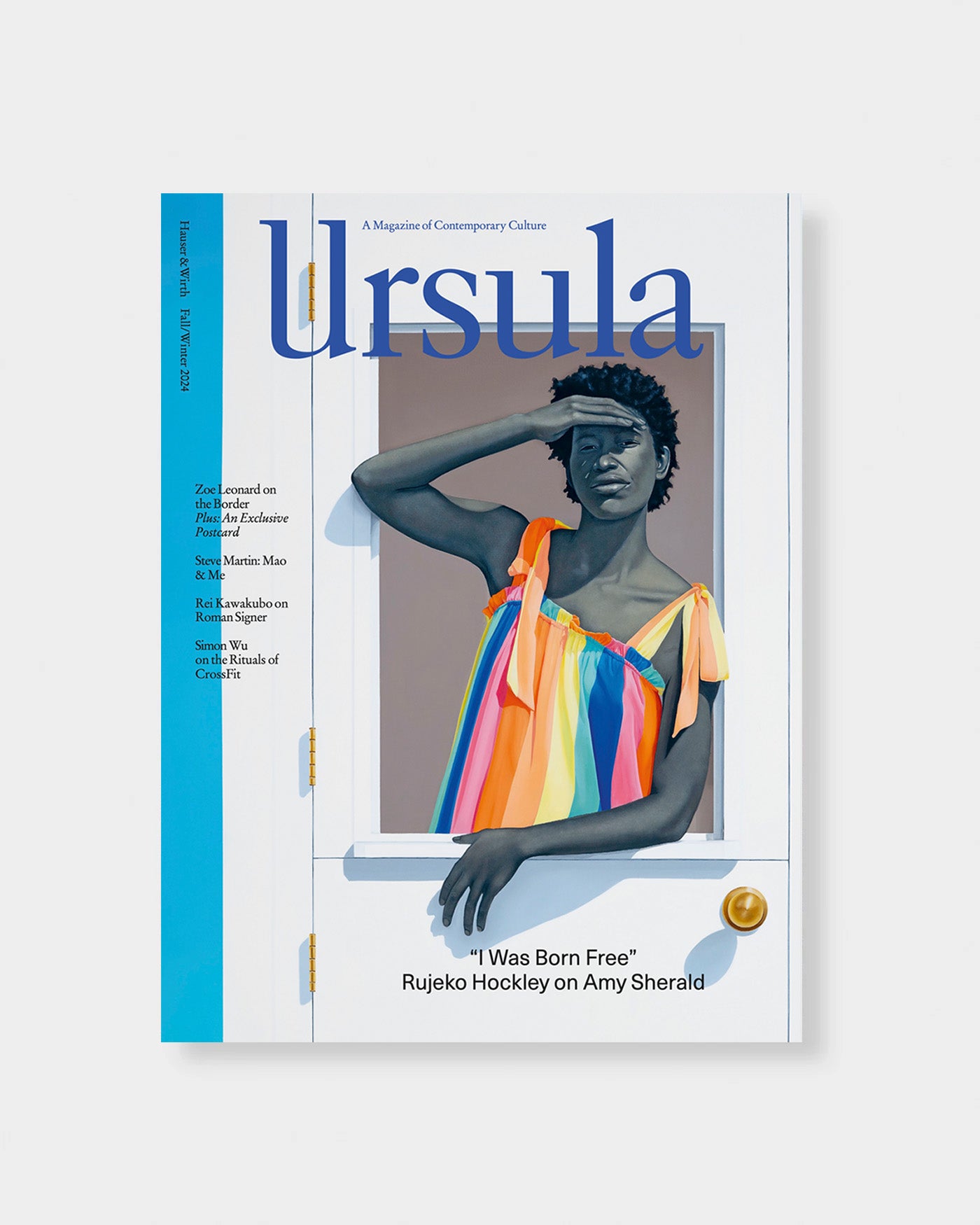
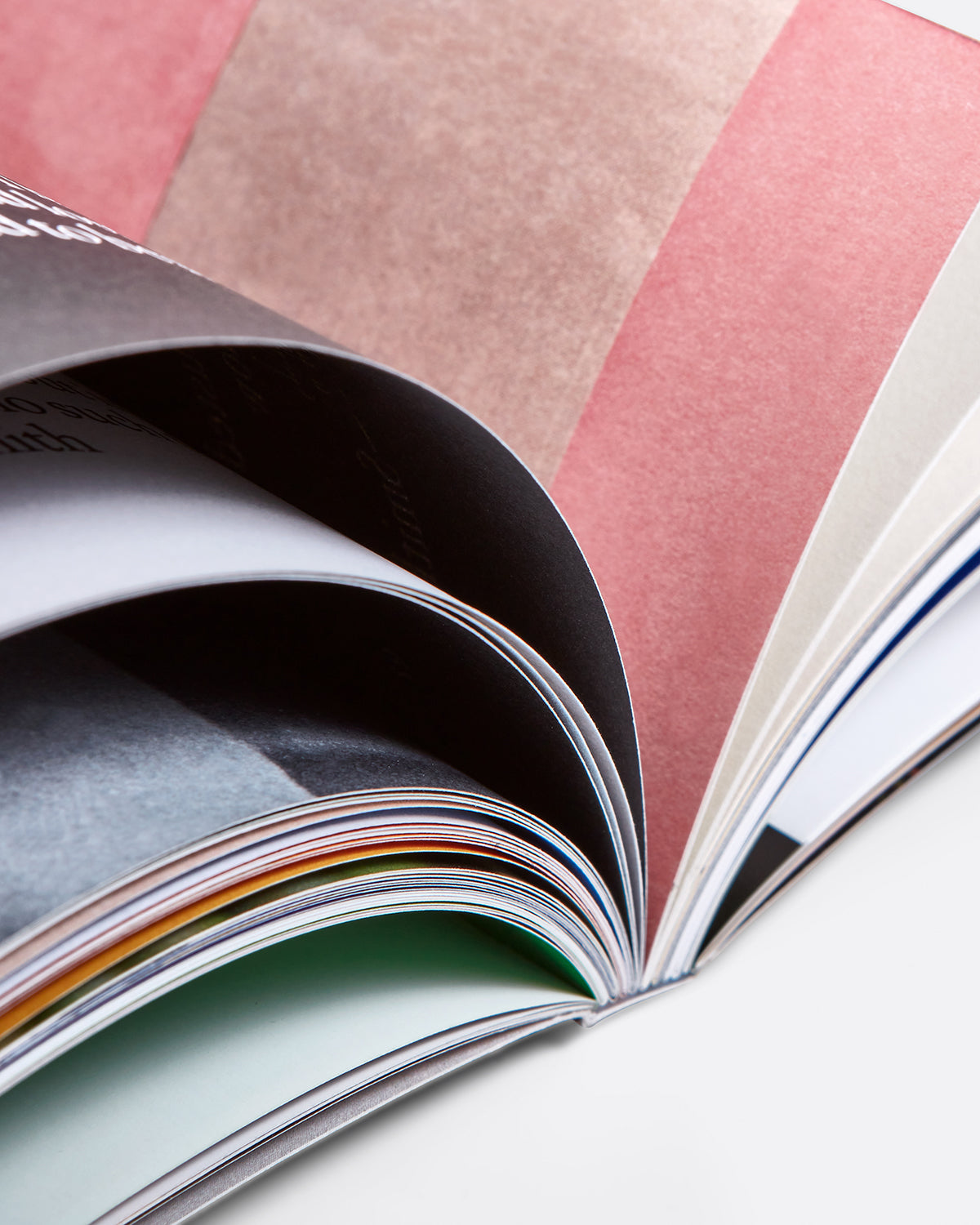
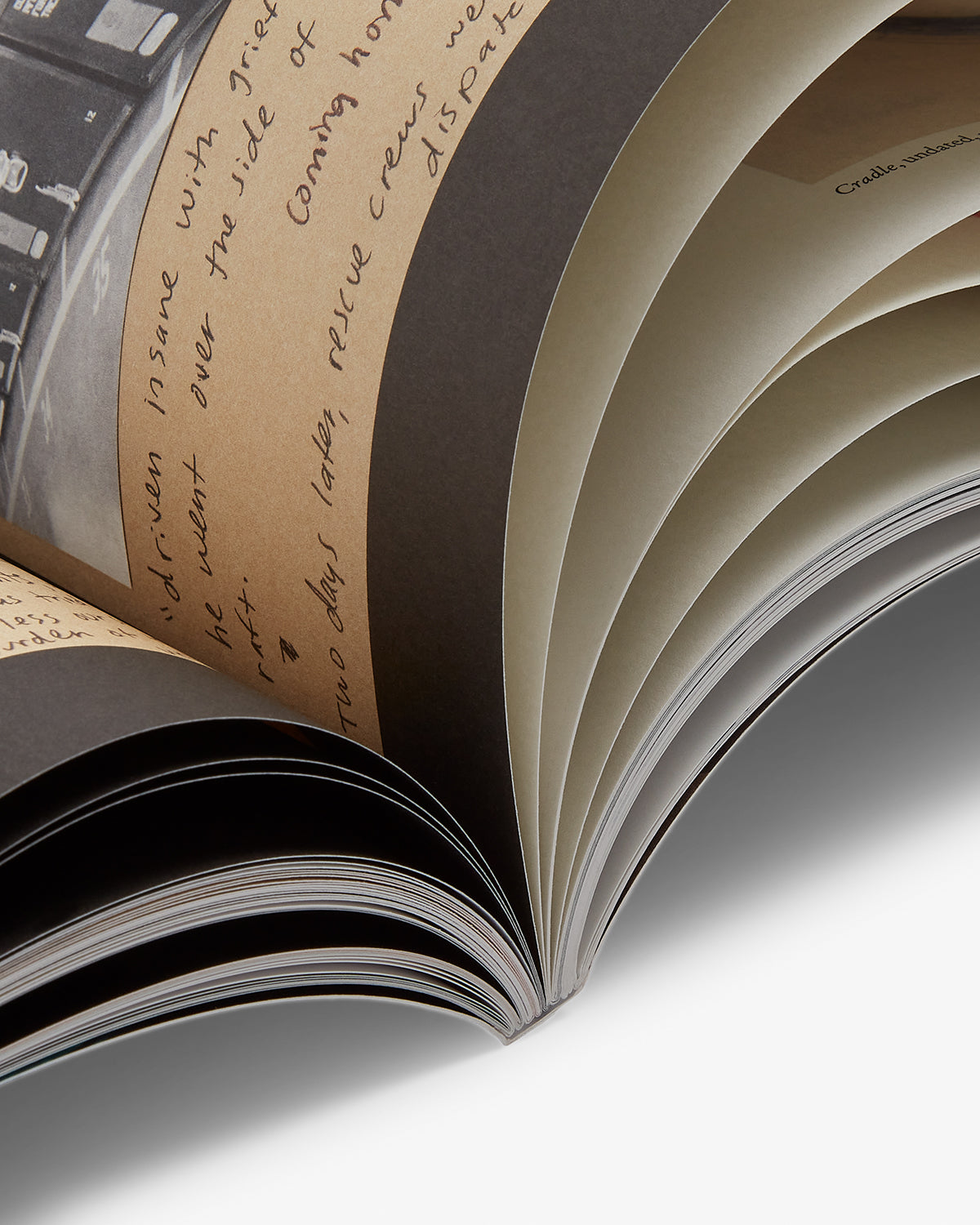
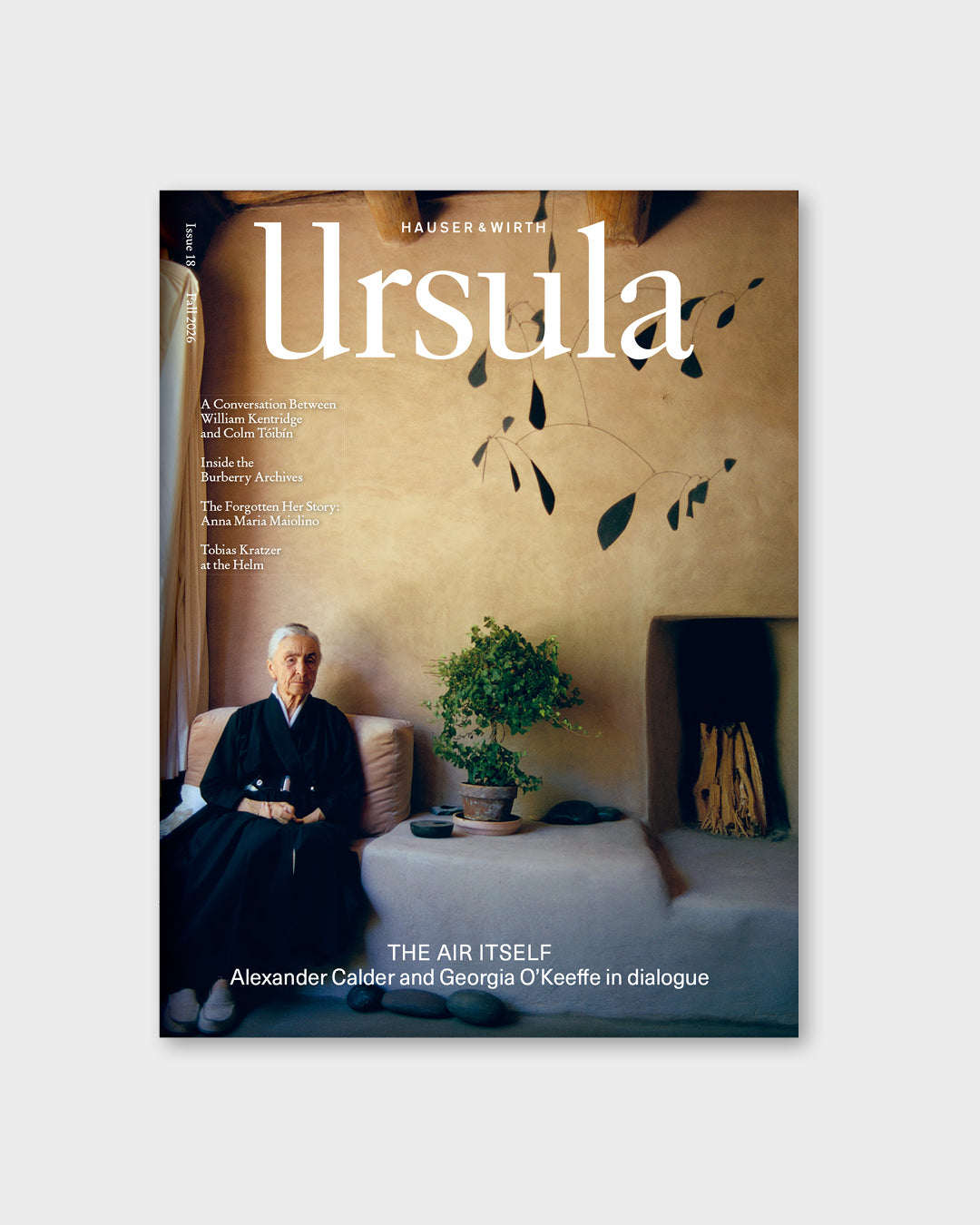
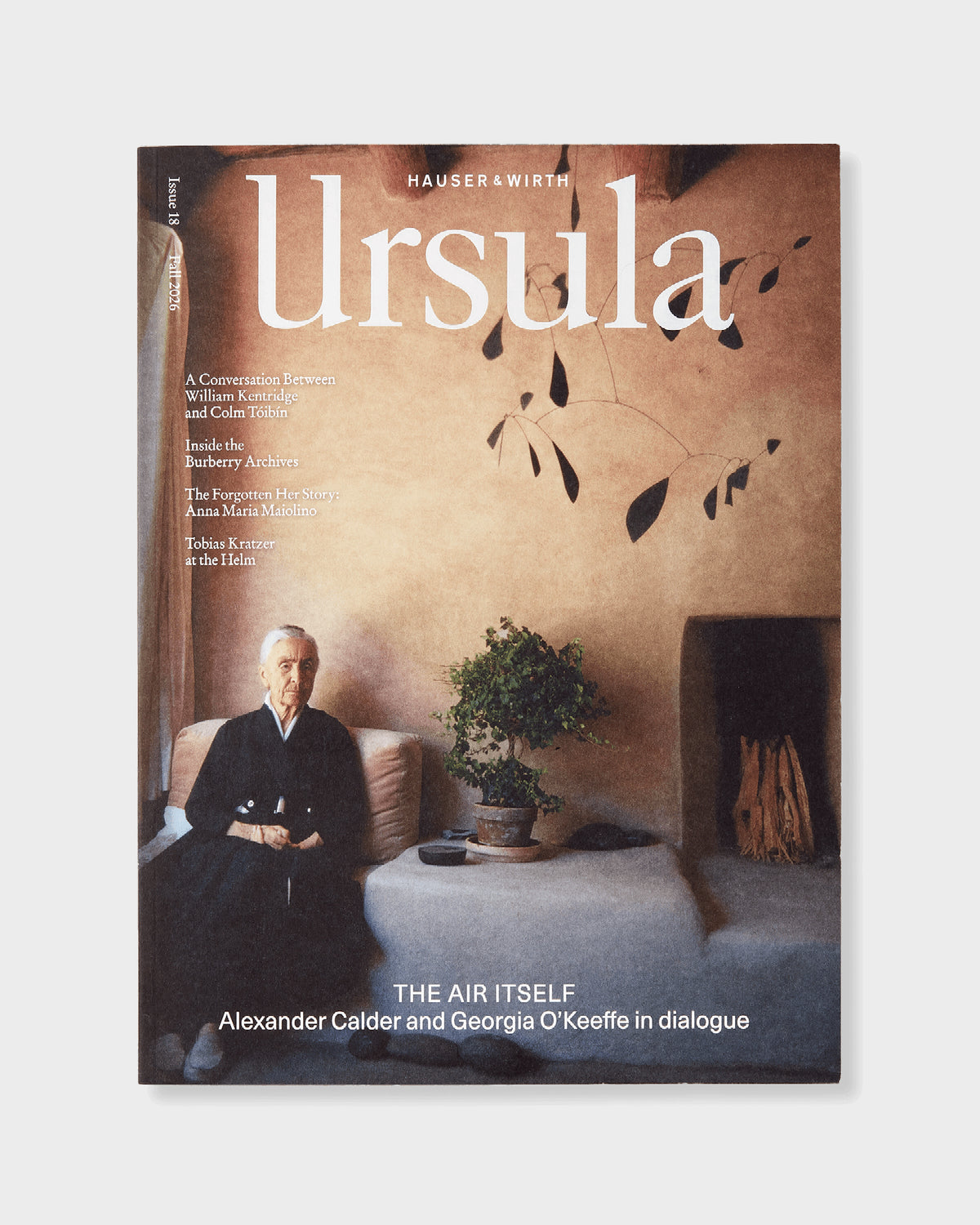
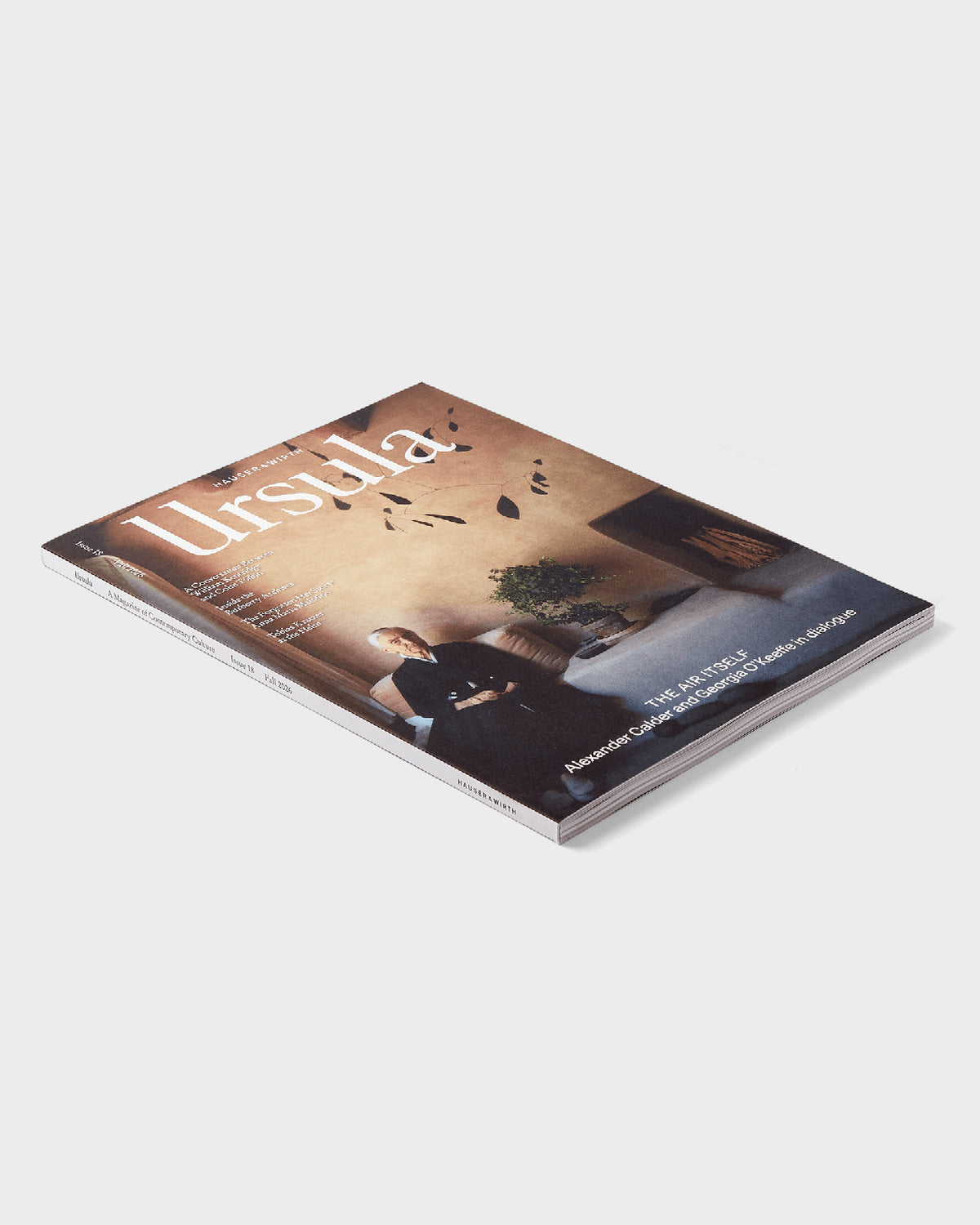
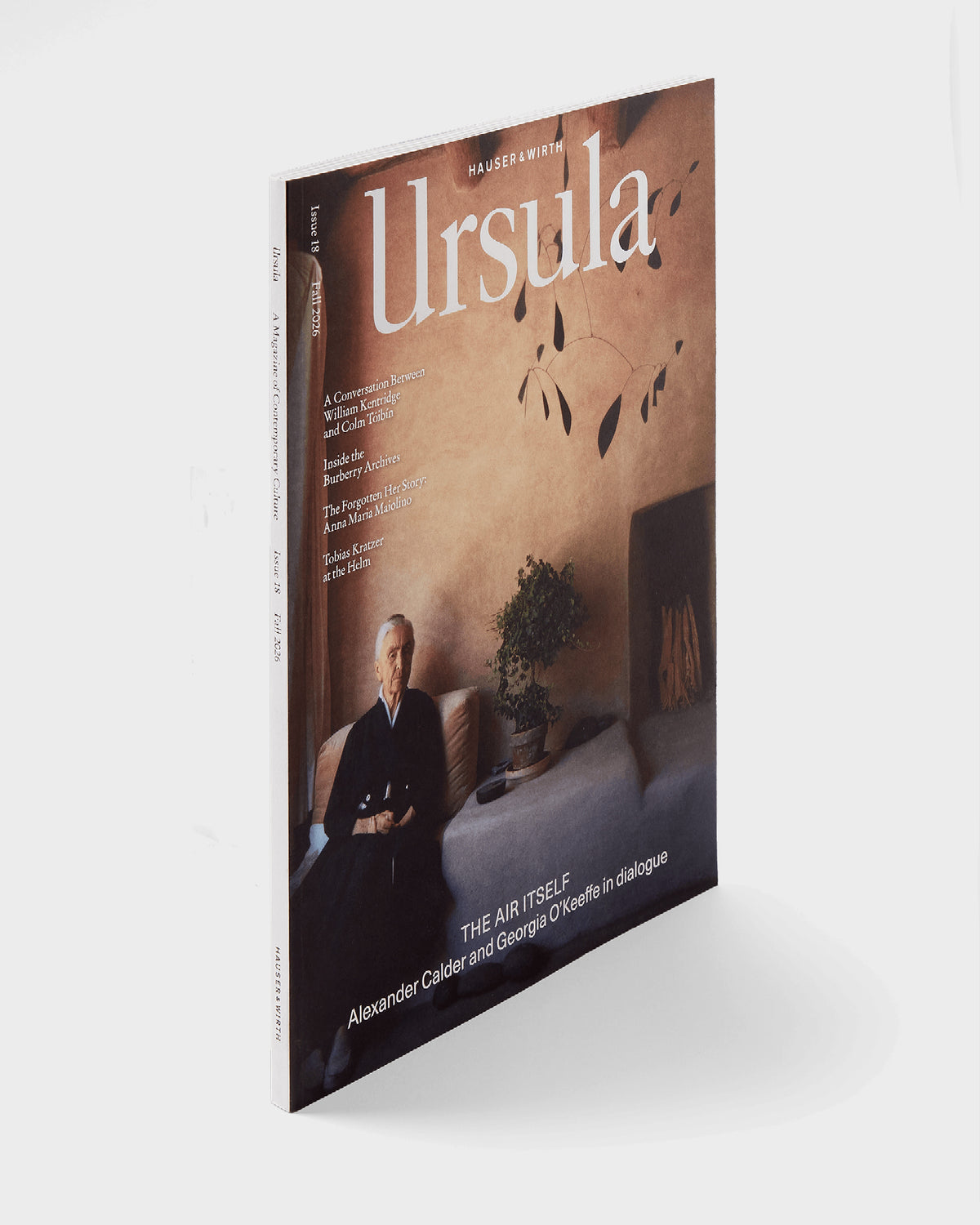
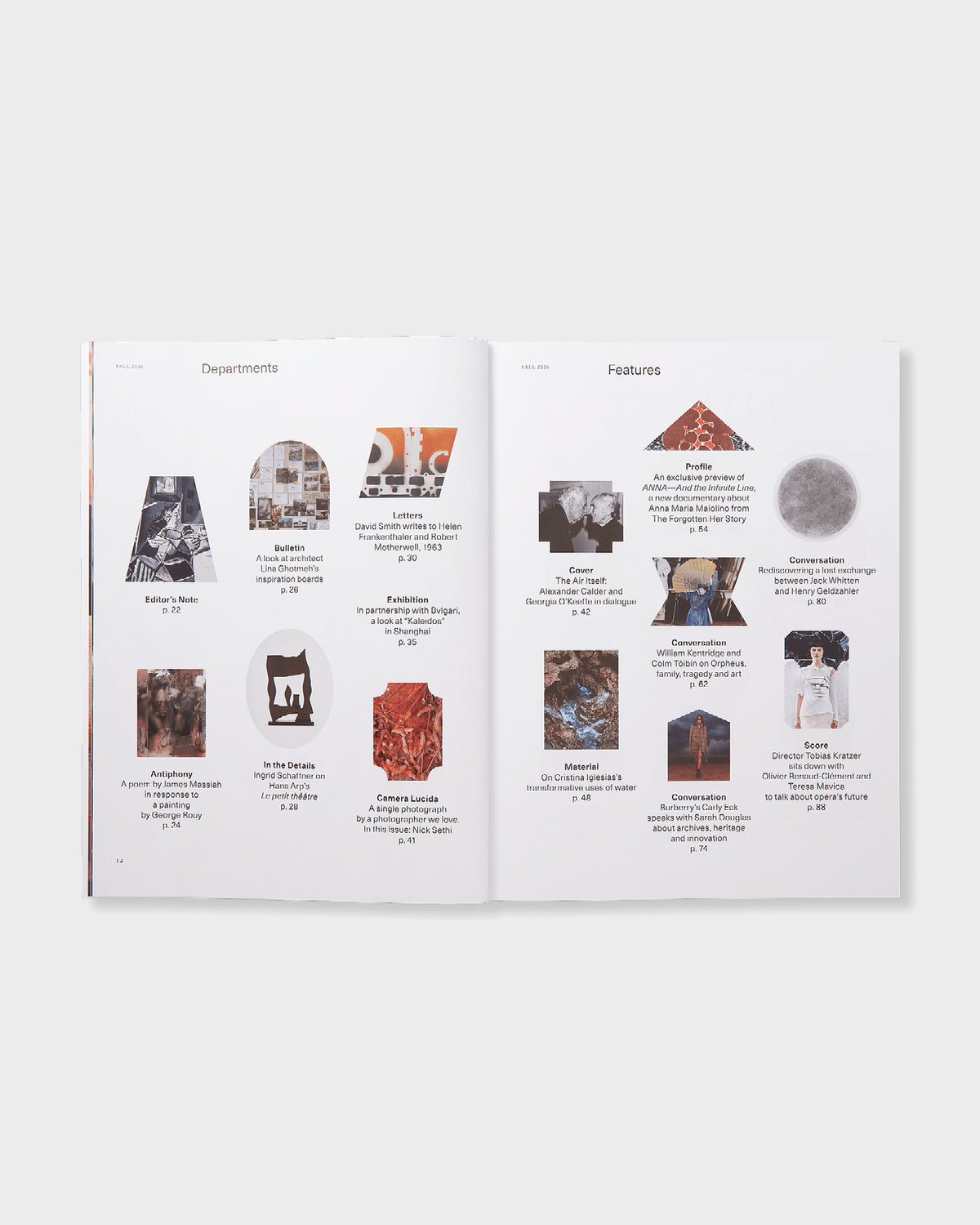
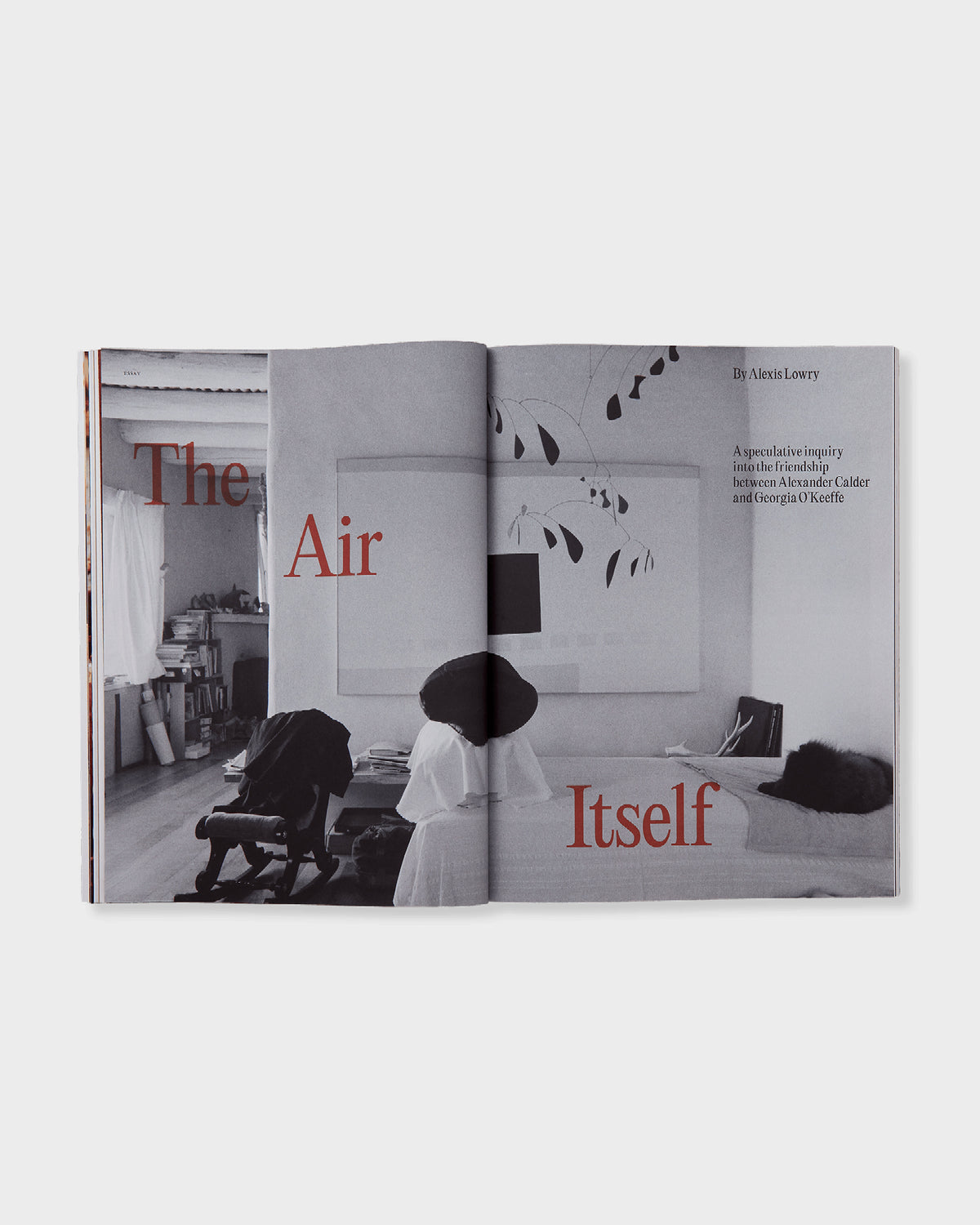
Issue 18 of Ursula explores the mysterious ways artists influence one another. Curator Alexis Lowry embarks on a speculative inquiry into the largely unexplored friendship between two 20th-century titans, Alexander Calder and Georgia O’Keeffe. Both artists, in distinct yet unexpectedly aligned ways, engaged with color and abstraction as a means of comprehending the embodied experience of the built and natural world.
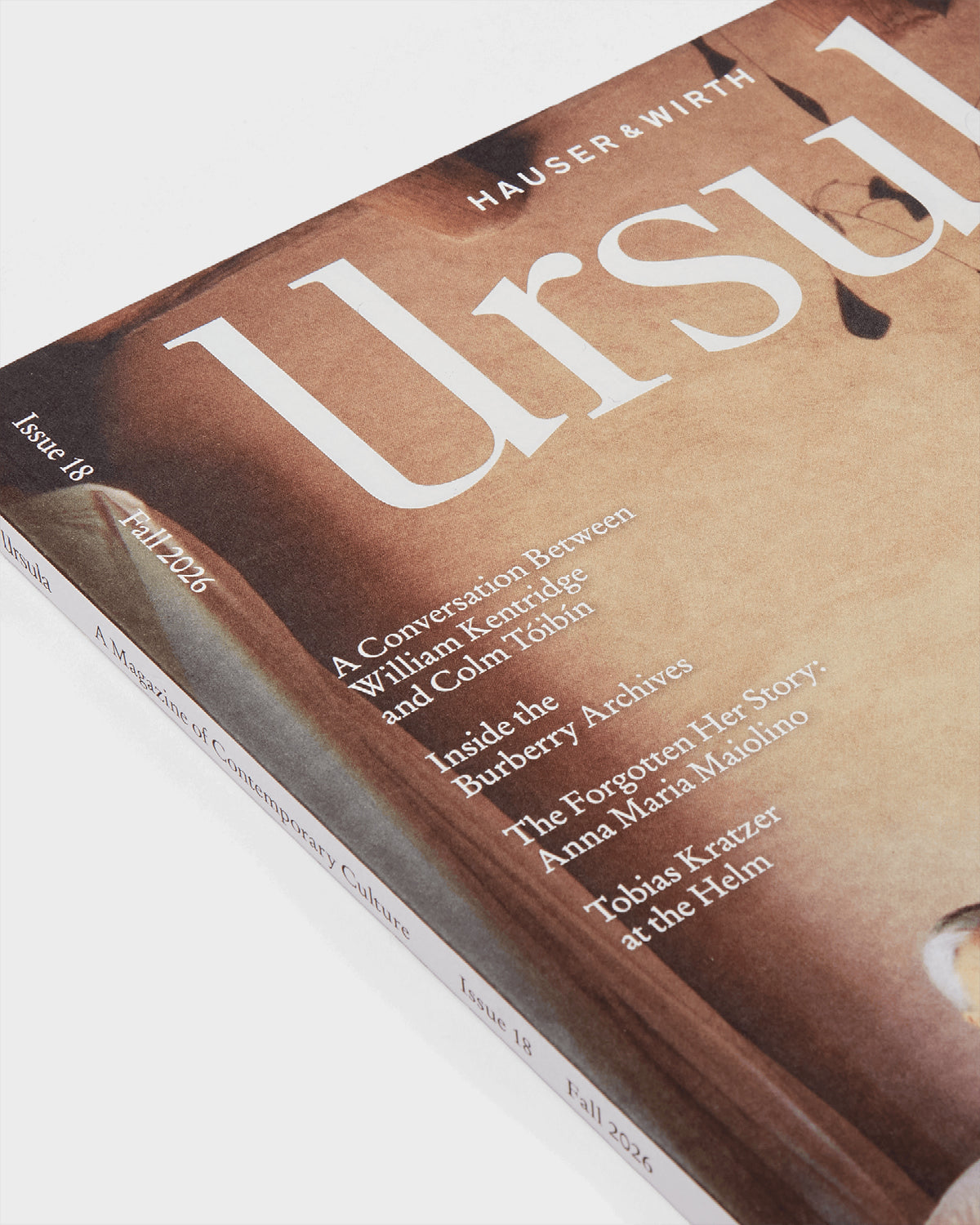
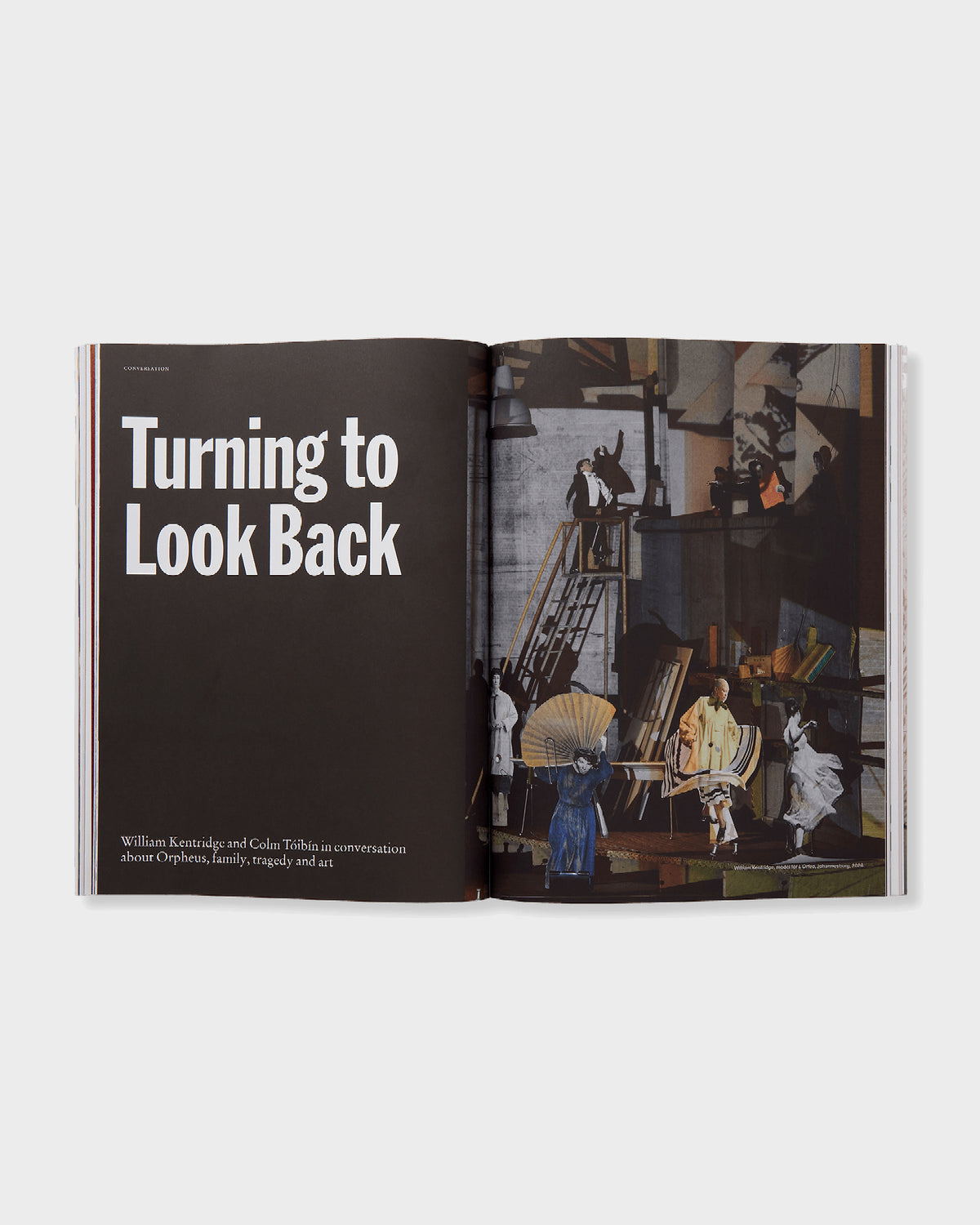
Elsewhere in the issue, artist William Kentridge and novelist Colm Tóibín, in conversation for the first time, explore the myth of Orpheus as a symbol of art’s fragile power to reclaim the lost.
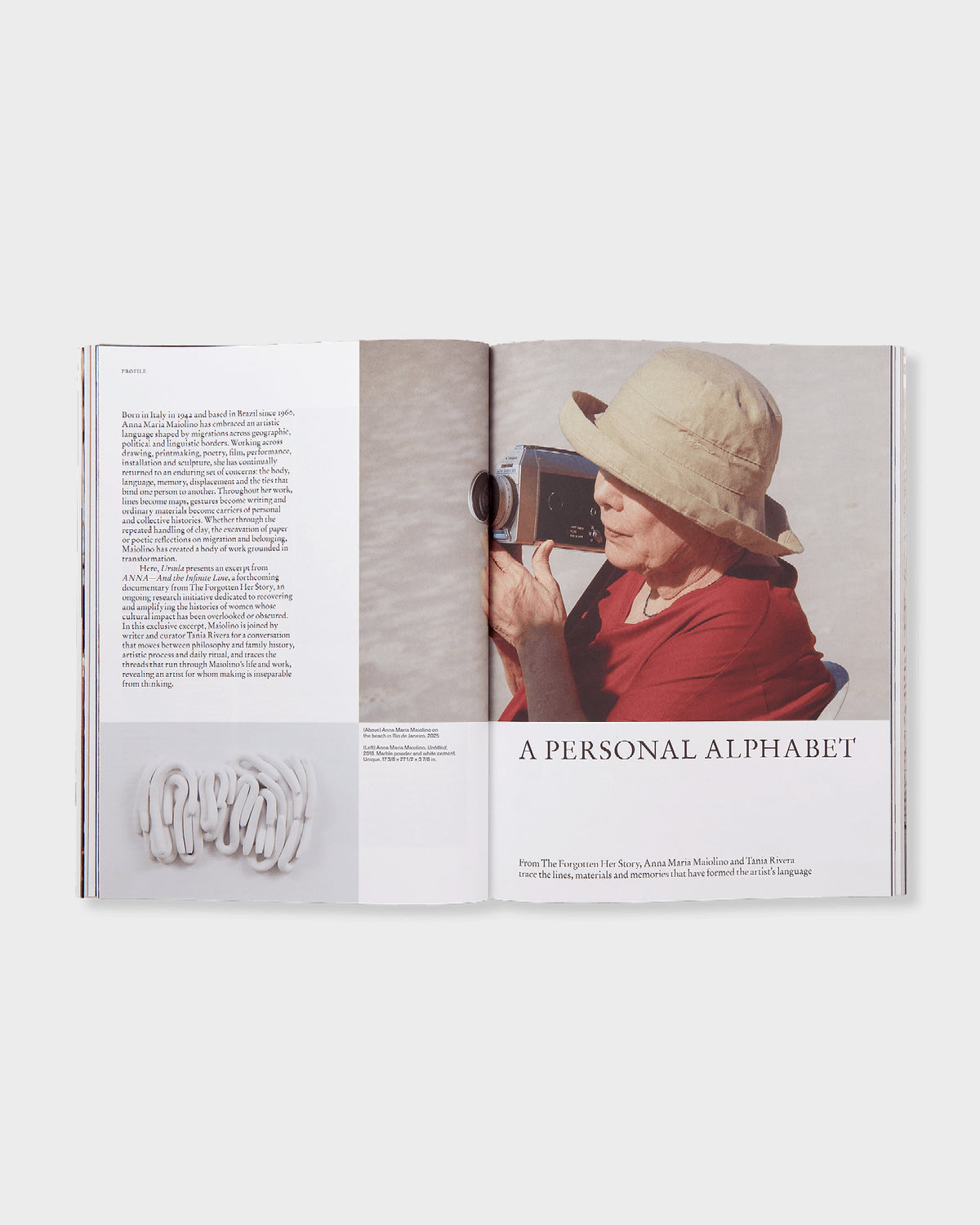
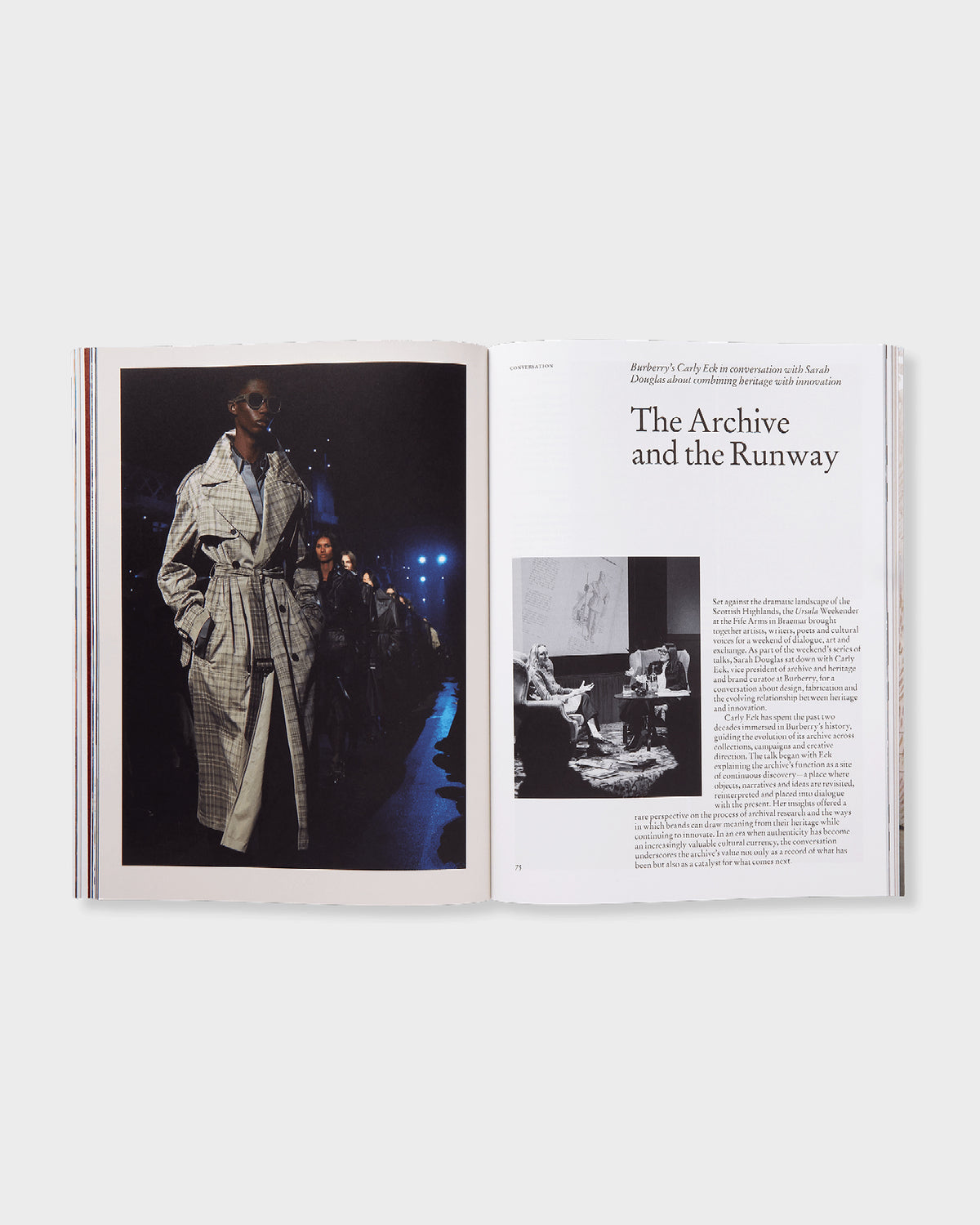
The issue also features a never-before-published 1983 conversation between Jack Whitten and curator Henry Geldzahler about Whitten’s interest in African sculpture. Burberry’s archivist Carly Eck speaks with Sarah Douglas about combining heritage with innovation. Anna Maria Maiolino and Tania Rivera trace the materials, memories and gestures that have shaped the artist's visual language, in an excerpt from The Forgotten Her Story, and Tobias Kratzer, director of the Hamburg State Opera, speaks about the genre’s experimental future.
Shipping & Returns
Depending on your location, items that you order may be shipped from the US or Europe.
We aim to deliver all orders within the UK / EU / US within 5 working days. Orders to be delivered to other destinations can normally be expected to arrive within 7 – 10 working days.
Shipping charges for all destinations will be calculated at checkout and included on your Order Confirmation.
For more information please review our Shipping & Returns Policy.
Choose options

Language
English
size
30.5 x 23 cm
Pages
128
Publication date
September 2026
From the Editor
Influence is one of art’s enduring mysteries—the labyrinthine ways in which artists’ work is shaped by that of peers or predecessors. When I think about it, Picasso’s obsessive re-interpretations of Velázquez’s Las Meninas always leap to mind and I fixate on the shadowy figure silhouetted in the open door at the back of the room in the court scene. He seems to stand in for the essential enigma at the heart of the painting, the mechanism that, try as he might in admiration and competition, Picasso was never able to fully unspring.
Over more than twenty years of writing about art, influence has been one of the most interesting and surprising parts of the job—hearing from artists about the artists they love, at times unexpectedly, improbably, in ways that often elude critics and historians . Richard Prince once told me about his deep fascination with Walt Kuhn, the Hopper-esque early 20th-century painter known best for his portraits of circus and vaudeville performers. If you squint, you might be able to discern some of Kuhn’s influence in Prince’s work, but it’s rarely so straightforward. How did Agnes Martin’s love of the ecstatic prints and paintings of William Blake figure into her grids? Why did Giorgio de Chirico’s eerie expanses speak to Andy Warhol or Nicolas Poussin’s Baroque classicism to a painter as radical as Cy Twombly?
The cover story of this issue asks such questions of the friendship between two 20th-century titans, Georgia O’Keeffe and Alexander Calder, about which remarkably little is known even now. At times, they crossed paths in the Modernist hothouse of the New York art world, where their circles slightly overlapped. They seemed to admire each other’s work, and in New Mexico O’Keeffe lived for years with a striking Calder mobile in her possession.
The two artists, as Alexis Lowry writes, at the very least shared a strong “sensitivity to rhythm, interval and spatial poetics” that suggests an affinity extending outward from their forms and colors “into the very logic of their practices.” How that affinity might have played out both consciously and unconsciously is one of the joys of thinking about their work in conjunction, along with a recognition of the limits of anything like certainty.
Elsewhere in the issue, the subject is raised again in a never-before-published 1983 conversation between Jack Whitten and the great curator Henry Geldzahler, who presses Whitten on the reasons behind his interest in African sculpture, suggesting it might well be unconscious. Whitten vigorously disagrees, arguing that he is fully aware of the influence, one of his most fundamental: “I see it as a God-given, innate sensibility. It’s mine.”
Yet even when artists understand and embrace sources of inspiration, the movement of these sources within their own work can remain enigmatic. In a remarkable conversation in the issue, William Kentridge and the novelist Colm Tóibín talk about the myth of Orpheus as a symbol of art’s power to haul things from darkness back up into light. But the act of turning around as Orpheus did, to assess, perhaps to look to the past, brings loss and knowledge simultaneously, inextricably.
The calculus of inspiration is maddening enough for the viewer. Imagine how the artist must feel. As Kentridge comically observes: “There are so many things that are done inside the studio that, if anybody were to get a glance inside they’d say, ‘Well, this is clearly a person who should be in some kind of institution!’ But I suppose we’ll humor him and let him go on.”
—Randy Kennedy
Preview
Featured in This Issue

The Air Itself
A speculative inquiry into the friendship between Alexander Calder and Georgia O’Keeffe

Turning to Look Back
William Kentridge and Colm Tóibín in conversation about Orpheus, family, tragedy and art

Hello Hamburg
Tobias Kratzer envisions an opera house that speaks to its audience, its city and far beyond

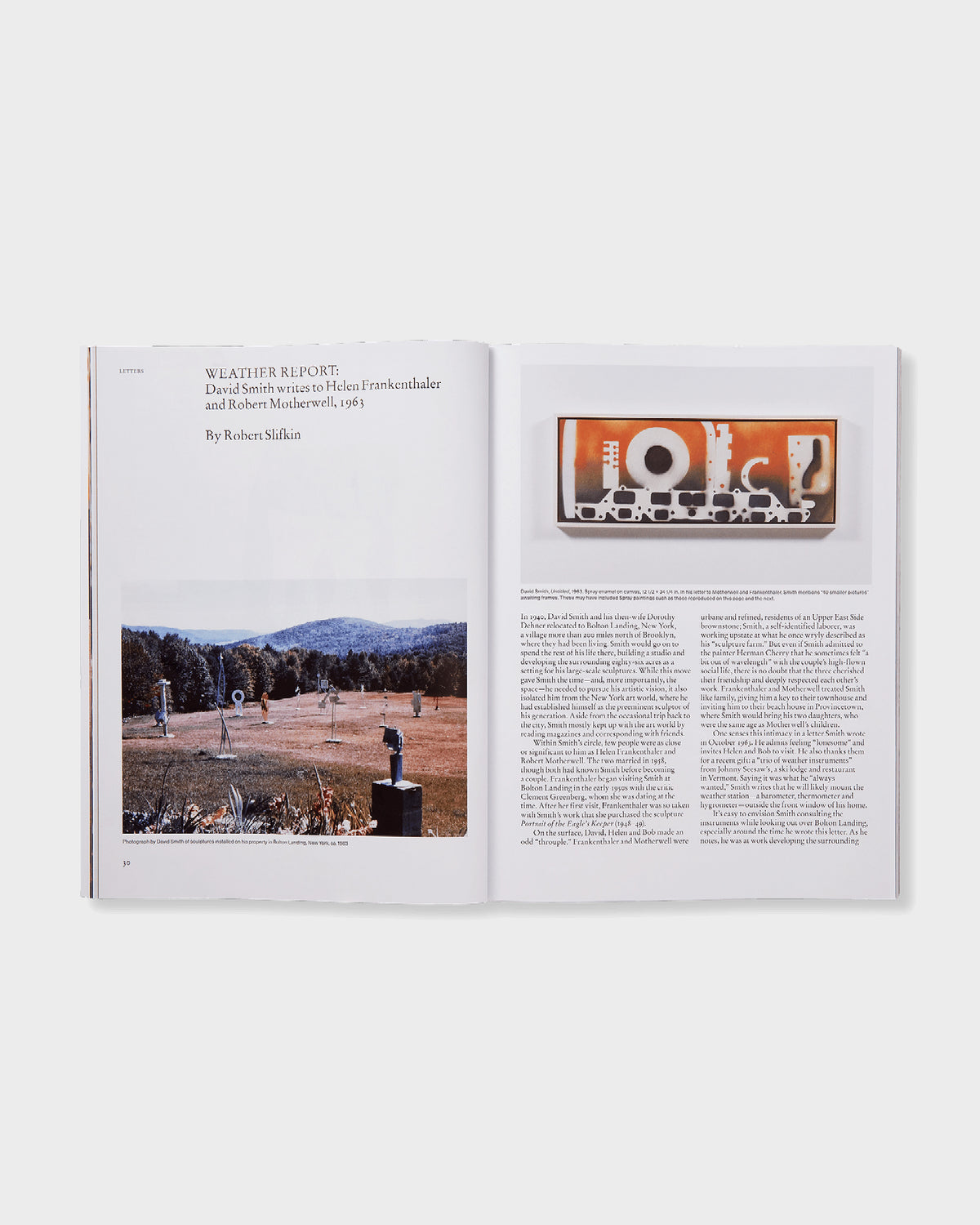
Weather Report
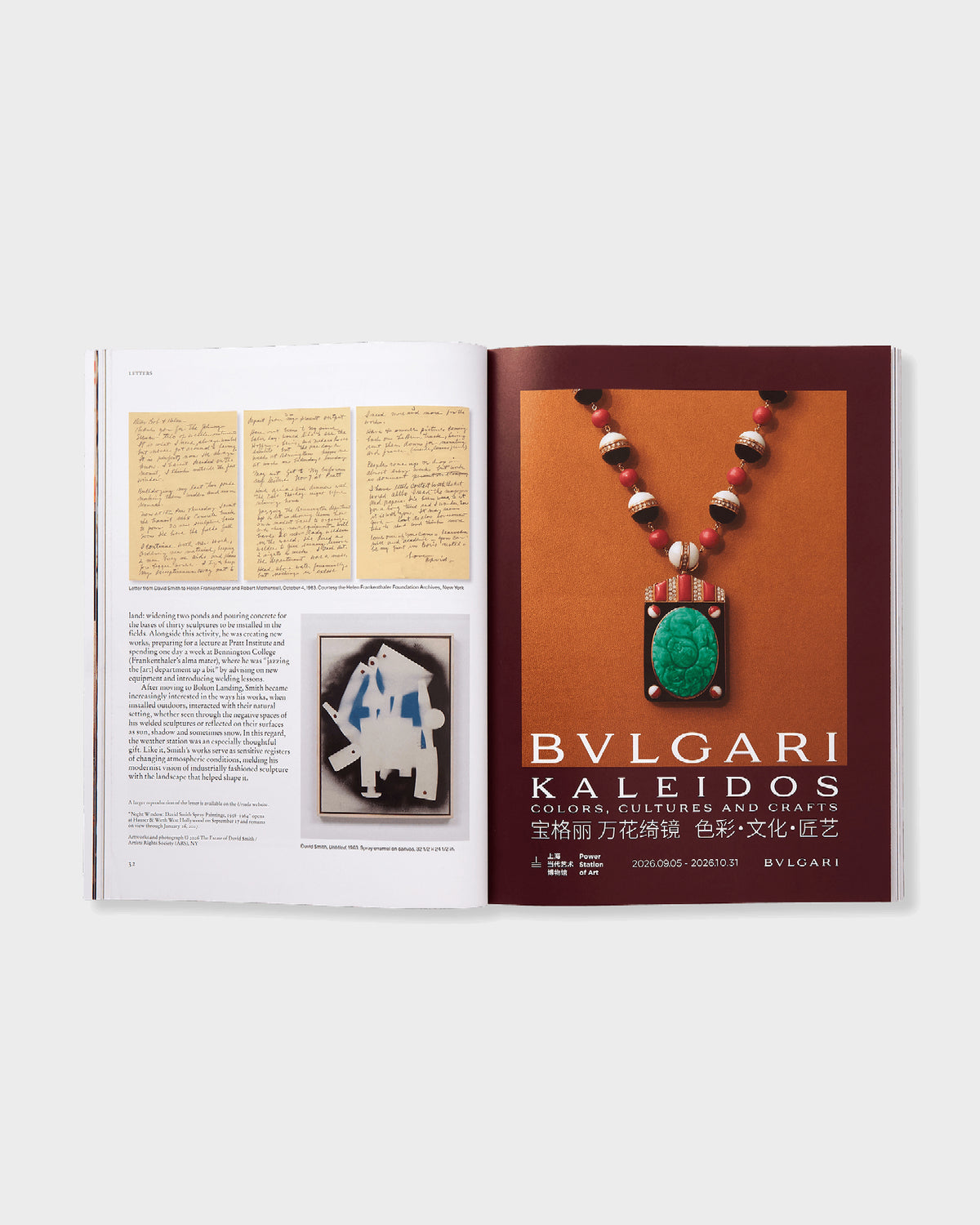
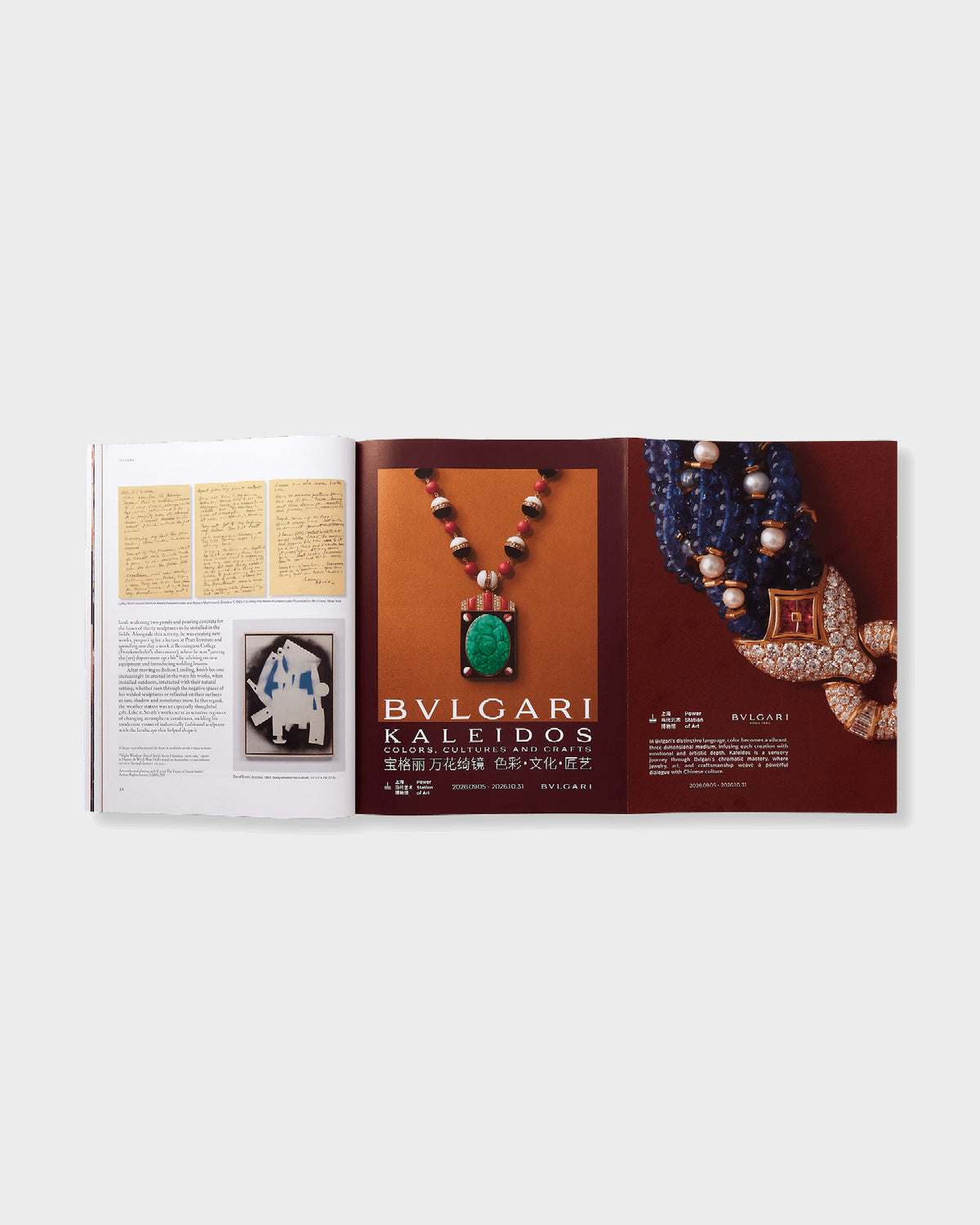
David Smith writes to Helen Frankenthaler and Robert Motherwell, 1963
Discover more
Ursula Collectibles